Press coverage

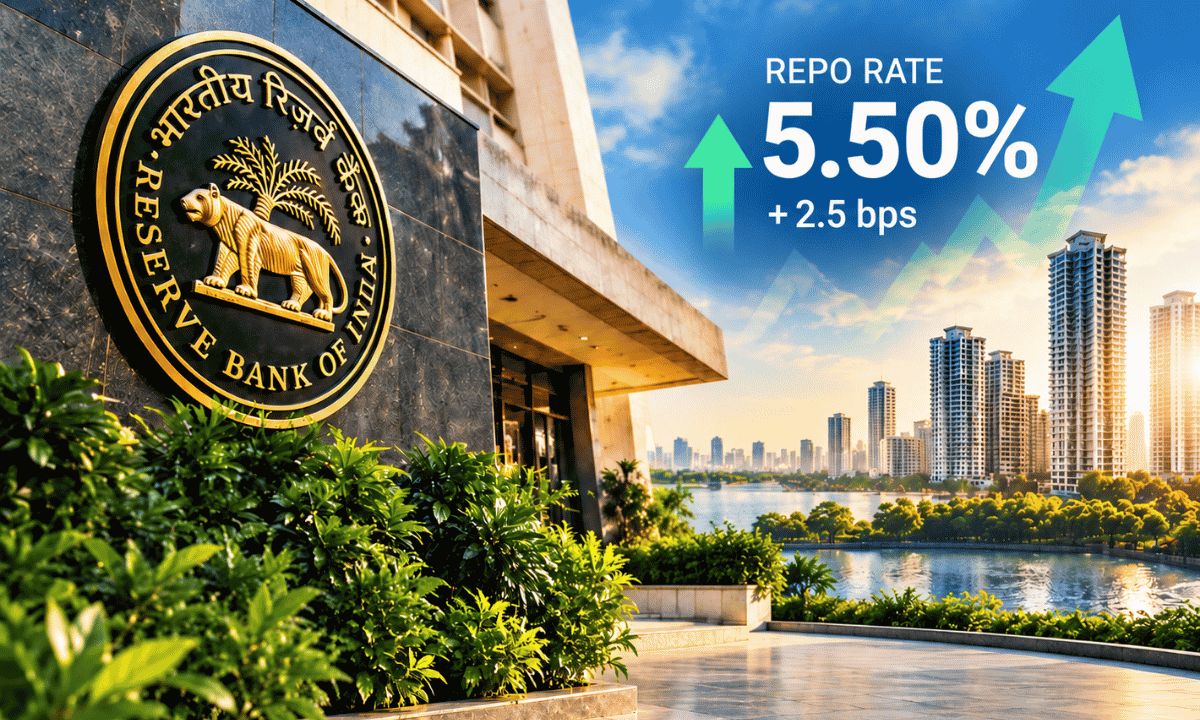
First Repo Rate Hike in Four Years: Real Estate Sees Short-Term Pressure, Long-Term Strength
RBI raises repo rate 25 bps to 5.50%. Developers and experts say housing demand stays resilient, but mid-income buyers and financing costs need watching.
The Reserve Bank of India raised the repo rate by 25 basis points to 5.50%, its first hike in nearly four years, and shifted its stance from "neutral" to "calibrated tightening." The move responds to elevated crude prices, a softer rupee, West Asia tensions and broader global inflationary pressures. It comes alongside a 40-bps upward revision to FY27 GDP growth, now at 7.1%.
The real estate sector broadly views the impact as measured and manageable. A single hike is unlikely to derail housing demand, which continues to be supported by the festive season, urbanisation, rising incomes, infrastructure growth and strong end-user appetite. Premium and luxury segments are expected to remain relatively insulated, while first-time and mid-income buyers will be more sensitive to higher EMIs and may take longer to decide or become more selective on budgets and ticket sizes.
A more cautious view also emerged. The timing, just ahead of the peak buying season, could weigh on sentiment, and the stance shift reduces the likelihood of near-term rate cuts. Developers face a higher cost of capital and possible margin pressure, making strong balance sheets, disciplined execution and delivery certainty more important. Some expect developers to offer festive discounts and flexible pricing plans to absorb part of the financing pressure. The pace and cumulative extent of further tightening is seen as the key variable ahead.

Mr. Santosh Agarwal, Executive Director & CFO, Alpha Corp Development Limited,
"The RBI’s decision to raise the repo rate by 25 basis points marks a cautious shift in the interest-rate environment, particularly after a prolonged period of stability. While the move could marginally impact borrowing costs and financing sentiment, we do not expect it to significantly disrupt the underlying momentum in the real estate sector. Housing demand, especially in the premium and mid-to-high-end segments, continues to be supported by improving incomes, urbanisation and strong end-user confidence. Developers may see some moderation in financing costs and buyer sentiment in the near term, but the sector’s structural growth drivers remain intact. The focus will now remain on maintaining demand resilience and market stability."